Node.js + Convex in 2026: The Reactive Backend Guide
Convex has quietly become the reactive backend developers actually want to ship on. Where 2024 was the year of edge databases and 2025 belonged to serverless Postgres, 2026 is when teams stopped wiring Socket.io to their Express APIs and let Convex handle subscriptions, mutations, and indexing in one TypeScript-first runtime.
If you are a Node.js engineer building a real-time product — a collaborative editor, a multiplayer game, a live dashboard, or an AI agent that needs streaming state — Convex collapses three or four moving parts (cache, pub/sub, ORM, websocket layer) into a single platform. This guide shows you how to build with it, where it shines, and where you still want a battle-tested Express service behind it.
What Convex Actually Is (and Why Node.js Teams Care)
Convex is a backend-as-a-service that pairs an indexed document database with strongly-typed serverless functions and a reactive engine that re-runs your queries the moment underlying data changes. Functions are plain TypeScript that you write inside a `convex/` folder in your repo — there are no separate cloud functions, no Terraform, no manually wired websockets. The SDK is published as `convex` on npm and integrates with any Node.js runtime.
Three function flavours: query, mutation, action
Queries are read-only and automatically cached. Mutations are transactional writes. Actions can call external APIs (Stripe, OpenAI, S3) and don't run inside the transactional store. The split matters: queries are pure functions of database state, which is precisely why Convex can re-execute them whenever a mutation touches their inputs.
How the reactive engine differs from polling
A traditional Node.js stack subscribes UI clients via Socket.io rooms, then manually broadcasts changes after each write. Convex flips this — every query that runs gets its read set tracked, and the reactive engine invalidates only the queries that touched the rows you just mutated. Your `useQuery('messages.list', { channelId })` hook updates automatically, with no broadcast code on your side.
When Convex Beats a Custom Node.js Stack
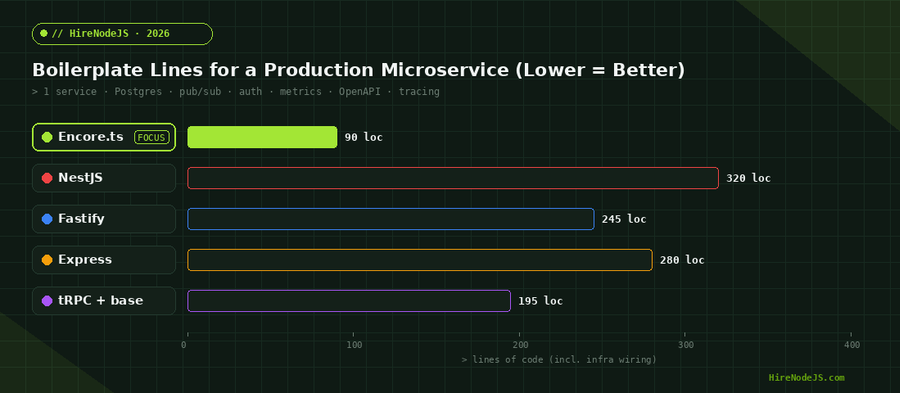
Build vs. buy is a real conversation in 2026. A senior Node.js engineer can absolutely ship Express + PostgreSQL + Redis pub/sub + Socket.io + a worker queue — but counting the days it takes to make that stack production-ready (auth, migrations, observability, retries, idempotency) is sobering. Convex collapses most of that into ~200 lines of TypeScript per feature.
Best-fit use cases
Collaborative editing (think Linear, Notion, Figma comments), multiplayer games and quizzes, live dashboards over operational data, AI agent state with streaming tool calls, and any product where 'optimistic UI plus eventually consistent server state' is the desired shape.
When to keep a separate Node.js service
Stay with custom Node when you need heavy media processing (Sharp, FFmpeg), long-running CPU work, on-prem deployment, or strict ACID semantics across complex multi-table joins. Convex actions can call out to a Node.js worker for these — many teams run Convex as the reactive layer and Express as the heavy-lifting layer.
A Real Convex Function in 2026
Convex functions live in `/convex/*.ts` and export named handlers. Every handler receives a typed `ctx` object with a database client, an auth identity, and a scheduler. Below is the kind of code that ships in production this year — note that the query and the mutation share a strongly-typed schema, and the React client gets end-to-end inference.
// convex/messages.ts
import { v } from "convex/values";
import { mutation, query } from "./_generated/server";

// Strongly-typed schema — defined in convex/schema.ts
// messages: { channelId: Id<"channels">, author: string, body: string, sentAt: number }

export const list = query({
  args: { channelId: v.id("channels"), limit: v.optional(v.number()) },
  handler: async (ctx, { channelId, limit = 50 }) => {
    // index on (channelId, sentAt) — Convex tracks this read set
    return await ctx.db
      .query("messages")
      .withIndex("by_channel", q => q.eq("channelId", channelId))
      .order("desc")
      .take(limit);
  }
});

export const send = mutation({
  args: { channelId: v.id("channels"), body: v.string() },
  handler: async (ctx, { channelId, body }) => {
    const user = await ctx.auth.getUserIdentity();
    if (!user) throw new Error("Unauthorised");
    if (body.length === 0 || body.length > 4000) {
      throw new Error("Message must be 1–4000 characters");
    }
    await ctx.db.insert("messages", {
      channelId,
      author: user.subject,
      body,
      sentAt: Date.now()
    });
    // No broadcast code. Every useQuery("messages.list", { channelId }) re-runs automatically.
  }
});
Authentication, Authorisation, and Multi-Tenant Patterns
Convex ships with first-class integrations for Clerk, Auth0, Custom JWT, and Workos. Inside a handler you call `ctx.auth.getUserIdentity()` to read claims and then enforce row-level access. The pattern is identical whether your tenant key is `organisationId`, `workspaceId`, or `tenantId`.
Row-level authorisation in two lines
There's no ORM-level RLS like Postgres gives you, but the handler-level approach is actually clearer to audit: every read or write that involves a tenant filter must include the tenant ID, and Convex's indexes make the lookup O(log n). For teams used to writing Postgres policies, this feels familiar in a different shape.
Service-to-service tokens
For server-to-server calls from an Express API into Convex, mint a service token and use `ConvexHttpClient` from the SDK. This is the right hand-off point when your Node.js workers need to read or mutate Convex state — for example, a Stripe webhook handler running on Express that needs to update a Convex subscription row.
Hire Pre-Vetted Node.js Developers
Skip the months-long search. Our exclusive talent network has senior Node.js experts ready to join your team in 48 hours.
Pricing, Scaling, and the Production Reality in 2026
Convex bills by function calls, document reads, document writes, and storage. The free tier is generous enough to ship an MVP; the Pro tier ($25/month per developer) covers most early-stage products with a few thousand DAU. Above that, the Enterprise plan kicks in with dedicated clusters, private regions, and SLA guarantees.
Cost gotchas to watch
The most common surprise is read amplification — a poorly indexed `.collect()` over a 100k-document table will burn through your read budget. Convex's profiler flags these in development, but you should make 'every query uses an index' part of your code review checklist, the same way you treat N+1 queries in Prisma.
Integrating Convex with Your Existing Node.js Stack
Most teams don't rip out their existing API — they add Convex for the reactive surface and keep their Express, Fastify, or NestJS service for everything else. The integration patterns below are what successful 2026 deployments look like.
Pattern A — Convex as the reactive layer, Node.js as the worker layer
Your Express service handles Stripe webhooks, image processing with Sharp, scheduled jobs via BullMQ, and any long-running CPU work. Convex holds the live, user-facing data. When the Express worker finishes a job, it calls Convex via `ConvexHttpClient` to update the user's row, and every subscribed UI updates in milliseconds.
Pattern B — Convex actions calling out to Node.js
Convex actions (the third function flavour) can issue outbound HTTP calls. This is the inverse direction: a Convex mutation finishes, schedules an action, and the action calls your Node.js service to send an email through Resend, enqueue a video transcode, or kick off a background AI job.
Pattern C — Shared auth via JWT
Use Clerk, Better Auth, or your own JWT issuer in front of both services. Convex validates the token via its JWT integration; your Express service validates the same token via `jsonwebtoken` or `jose`. Your users sign in once and both backends recognise them.
// node-server/src/sync-to-convex.ts
// Express handler that updates Convex from a Stripe webhook
import { ConvexHttpClient } from "convex/browser";
import { api } from "../convex/_generated/api";

const convex = new ConvexHttpClient(process.env.CONVEX_URL!);
convex.setAuth(process.env.CONVEX_SERVICE_JWT!);

export async function handleStripeWebhook(event: Stripe.Event) {
  if (event.type === "invoice.paid") {
    const invoice = event.data.object as Stripe.Invoice;
    await convex.mutation(api.billing.markPaid, {
      stripeCustomerId: invoice.customer as string,
      invoiceId: invoice.id,
      paidAt: invoice.status_transitions.paid_at! * 1000,
      amountCents: invoice.amount_paid
    });
  }
}
Every connected client now sees the new invoice state without any websocket plumbing.
Testing and Observability
Convex provides `convex-test` (Vitest-based) for unit-testing your functions against an in-memory simulation of the database. Mutations are run in isolation, queries are deterministic, and you can assert on database state after the fact. For end-to-end tests, run your local Convex dev server alongside Playwright.
Observability hooks
Convex exposes a function log stream you can pipe into Datadog, Axiom, or your existing OpenTelemetry pipeline. The platform also surfaces a per-function dashboard with p50/p95/p99 latency, error rate, and read/write amplification — enough to diagnose 80% of production issues without leaving the console.
Hire Expert Node.js Developers — Ready in 48 Hours
Building the right reactive system is only half the battle — you need the right engineers to build it. HireNodeJS.com specialises exclusively in Node.js talent: every developer is pre-vetted on real-world projects, API design, event-driven architecture, and production deployments including platforms like Convex.
Unlike generalist platforms, our curated pool means you speak only to engineers who live and breathe Node.js. Most clients have their first developer working within 48 hours of getting in touch. Engagements start as short-term contracts and can convert to full-time hires with zero placement fee.
Final Thoughts: Should You Build on Convex in 2026?
If your product needs real-time UI updates and you're early enough to choose a stack, Convex is the easiest path from idea to shipped feature. The 'no broadcast code' property alone is worth weeks of engineering time over the life of a startup. Pair it with a Node.js backend layer for media, billing, and heavy work, and you get an architecture that scales from prototype to series B without rewrites.
Where Convex still feels young is the ecosystem — third-party libraries that assume Postgres, ORMs that don't speak Convex's document model, and a smaller pool of senior engineers who've shipped it. Hire carefully, prototype before you commit, and treat the platform's docs as your primary source of truth.
Frequently Asked Questions
Is Convex production-ready for Node.js teams in 2026?
Yes. Convex powers production workloads at scale today, with a stable SDK, generous free tier, enterprise SLA option, and integrations for Clerk, Auth0, Workos, and Better Auth. The main caveats are ecosystem breadth and the need to hire engineers comfortable with its document-based model.
How does Convex compare to Firebase Realtime Database?
Convex offers stronger type safety via TypeScript-first APIs, transactional mutations, server-side validators, and an indexed document model. Firebase has a larger ecosystem and longer track record but weaker type safety and a less predictable cost model at scale.
Can I use Convex alongside an existing Express or NestJS API?
Absolutely. The most common 2026 pattern is Convex as the reactive layer and Express/NestJS as the heavy-lifting layer for media, billing, and scheduled jobs. Communication happens via `ConvexHttpClient` from Node and via Convex actions calling back out to your Node API.
What does Convex cost for a mid-size SaaS in 2026?
The Pro tier starts at $25/month per developer with included function calls and document reads. Most mid-size SaaS teams spend $200–$800/month at the platform level — significantly less than the equivalent cost of running Postgres, Redis, websockets, and pub/sub themselves.
How hard is it to hire Node.js developers experienced with Convex?
Senior Convex experience is still relatively rare in 2026, but any strong TypeScript-first Node.js engineer picks up the platform inside a week. HireNodeJS pre-vets developers on the specific patterns Convex uses, so you can skip the onboarding tax.
Does Convex support edge runtimes like Cloudflare Workers?
Yes — the JavaScript SDK works in Workers, Vercel Edge, and Deno Deploy. Convex itself runs in regional clusters, so end-to-end latency depends on the client region and your chosen Convex region pairing.
Vivek Singh is the founder of Witarist and HireNodeJS.com — a platform connecting companies with pre-vetted Node.js developers. With years of experience scaling engineering teams, Vivek shares insights on hiring, tech talent, and building with Node.js.
Need a Node.js + Convex engineer for your reactive product?
HireNodeJS connects you with pre-vetted senior Node.js engineers experienced in reactive backends, Convex, and TypeScript — available within 48 hours. No recruiter fees, no lengthy screening.